
On Turning 70: Stein Seal Looks Back
In 1955, America was riding a massive wave of prosperity that began with the end of World War II. The Post-War era was a period of unprecedented growth in manufacturing, industry, research, culture, and entertainment, and by the middle of the decade, the boom was well into a sustained crescendo. In this single year, America saw the debuts of McDonald’s, Disneyland, the Polio vaccine…and Stein Seal Company.
In the 70 years since Dr. Philip C. Stein founded his company in Philadelphia, mechanical seals have undergone sustained technological evolution in response to increasing demand and ambition from industries like aerospace, power generation, chemical processing, and others. Stein Seal has played a pivotal role in this progression, particularly in high-speed, high-temperature, and high-pressure sealing applications.
Here is a timeline-style summary of the mechanical seal’s evolution, along with highlights from the long list of Stein’s own technical contributions that have helped keep the industry moving ever forward.
1950s–1960s
When the dust finally settled after World War II, all the advancements in technology that fueled the Allied campaign found countless applications in civil industry as the world began to rebuild. Seal technology was a prime example; the war effort had produced important milestones in seal evolution, such as synthetic rubber, advanced ceramics, elastomers, steel alloys, and the “O” ring.
In the early 1960’s, Westinghouse Electro Mechanical Division was attempting to locate the most technically advanced seal company to work with them on developing a seal for their large pressurized water reactor cooling pumps for nuclear power generation. They chose Stein for the job, leading to the patented hydrostatic seal. After over 19 million hours of operation, the performance and reliability of this seal are legendary. Stein’s hydrostatic seal was integral to Westinghouse becoming the global leader in nuclear energy.
Starting from a 5-person operation in 1955, Stein Seal Company ended the 1960s with over 70 employees and an enviable roster of prestigious clients.
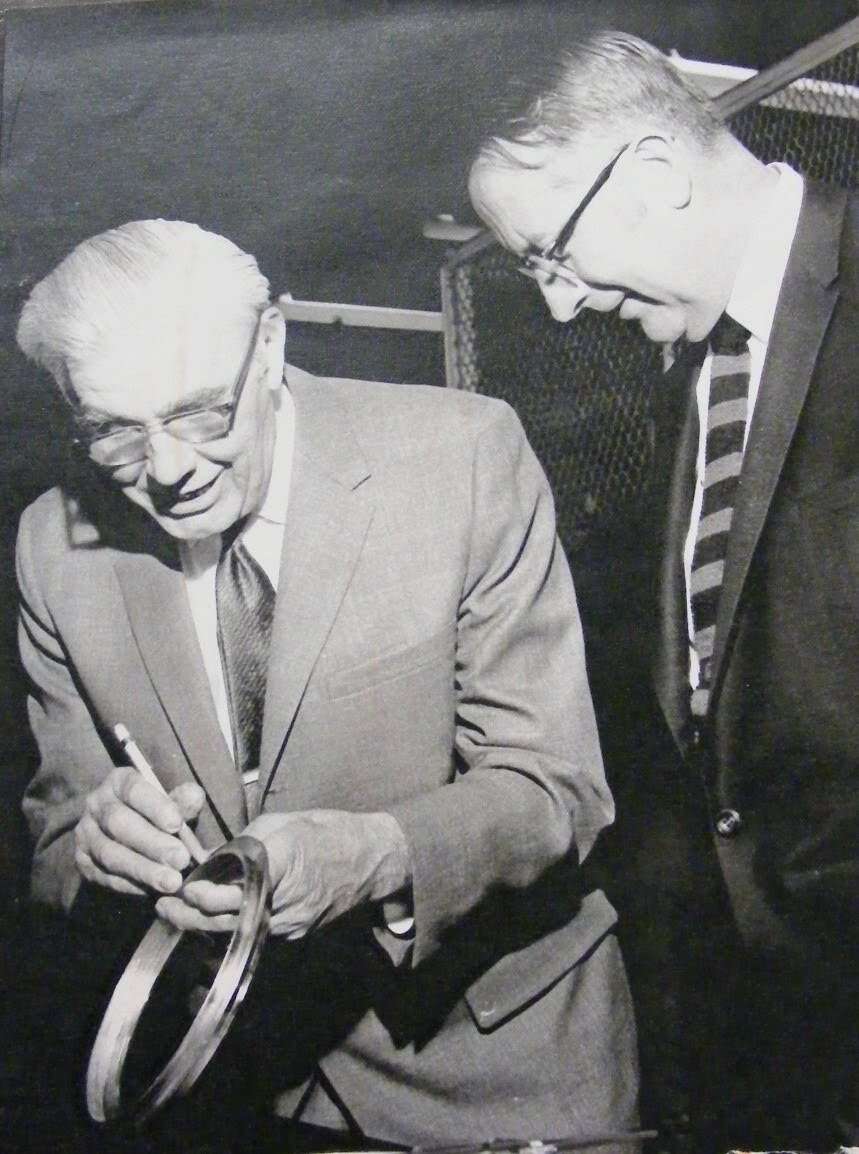
- 1955: Stein Seal is founded, focusing on precision machining and sealing components for emerging aerospace applications and laying the groundwork for custom, high-performance sealing systems. Stein also designs and manufactures the worlds first mainshaft circumferential seal assembly (three ring configuration) to replace labyrinth seals in gas turbines for aerospace applications.
- 1959: U.S. Patent received for the Circumferential Segmented Contacting Seal Design, invented by Dr. Philip C. Stein.
- 1961: Stein Seal designs and manufactures the nuclear reactor control rods and seals for the NS Savannah, the world’s first nuclear-powered commercial ship.
- 1963: First commercial nuclear reactor cooling pump with seals designed and manufactured by Stein Seal Company to replace less efficient “canned” pumps.
- 1966: Stein Seal Company chosen by General Electric to design and manufacture aerospace gas turbine mainshaft seals for the Boeing Supersonic Transport (SST).
1970s–1980s
The second half of the century was marked by significant advancements in seal performance, efficiency, and durability. New materials, innovative new designs, and the introduction of industry-wide standards and regulations all shaped seal development through the ‘70s and ‘80s.
While the 1970s were marked by economic recession and sluggish commercial activity, Stein Seal Company was engaged in a series of special projects which, while not particularly lucrative for the company, did result in significant engineering advancements in nuclear energy, the Supersonic Transport, or SST (Concorde), and the Exxon Colony Shale Project. All of these projects were eventually canceled due to adverse economic circumstances, but not before Stein had made considerable contributions to game-changing seal technologies that are still relevant today.
- 1974: Designed and manufactured the first Hydrodynamic Gas Face Seal Assembly for industrial applications. This marked a significant advancement in gas sealing technology.
- 1978: Received a U.S. Patent for Hydroload Seal design. This suggests a patented innovation in their seal designs.
- 1979: Developed a self-aligning spiral groove face seal. This seal was designed to maintain parallel sealing faces in challenging environments like high-speed, high-pressure gas turbines and compressors.
- 1980s: Designed the first commercial hydrostatic reactor coolant pump (RCP) seal for the pressurized water reactor (PWR) market. This was a critical development for maintaining safety in nuclear power plants.
- 1980s: Designed seals for the Superphénix fast breeder reactor (FBR) in Switzerland.
- 1980s: Designed pump face seals for the Westinghouse liquid metal FBR.
- 1984: Chosen by Pratt and Whitney to design and manufacture the mainshaft seals for the F119 aerospace gas turbine.
- 1985: Implemented the first use of Coordinate Measuring Machines (CMM), demonstrating investment in precision manufacturing and quality control for seals.
- 1986: Secured their first sale to Garrett (now Honeywell) for turbine engines.
1990s
In the 1990s, stricter environmental regulations required drastic reductions in volatile organic compound (VOC) emissions and the industry had to come up with higher-efficiency turbine engines with near-zero leakage. Demands on reliability and performance also increased. Innovative solutions followed, including advanced materials and new seal technologies.
- 1990s: Stein pioneered the design of aspirating seals–a major innovation over traditional labyrinth or brush seals.
- 1990s: Stein’s aspirating seals offer reduced wear, tighter clearances, and better thermal management, especially in gas turbines.
- 1990s: Awarded patents for unique face seal geometries and pressure balance systems.
- 1991: Long term Preferred Supplier contract signed with Allison (now Rolls Royce) for Turbine engine seals
- 1992: Stein Seal Company won the contract to become the long term supplier of seals for the CF34-3 aerospace gas turbine.
- 1993: Designed and built the first intershaft seal rig for testing aerospace gas turbine seal designs at Stein Seal Company.
- 1998: U.S. Patent received for the Hydrovent Seal design.
- 1999: Stein Seal Company receives approval for an FAA Repair Station.
2000s–2010s
Environmental regulations and more demanding industrial aspirations kept the pressure on the industry for even more innovation. Leakage and emissions, chronic inadequate lubrication, high maintenance costs, and equipment wear all remained areas of concern.
- Stein achieves advanced integration of composite and ceramic materials into sealing systems.
- Stein delivers custom-engineered seals for high-profile defense and space applications, including spacecraft turbopumps and jet propulsion.
- Stein provides seal systems with integrated diagnostics for condition monitoring.
- 2000: First carbon manufacturing cell established
- 2001: First flight of the F-119 using Stein Seal Company mainshaft seals
- 2002: First Hydrogen Cooled Generator Seal Assembly put into service
- 2007: Chosen by General Electric to design and manufacture the mainshaft seals for the GenX™ gas turbine engine
- 2009: Developed the first Hydrodynamic Circumferential Seal for large axial translations
- 2010: Selected by Rolls-Royce for the development of the Trent XWB mainshaft seals
- 2013: Constructed 2nd test set-up for Dynamically Testing Nuclear Circulating Pump Seals at 2,000 PSI
- 2015: Stein Seal Celebrates 60th Anniversary
- 2015: Aerospace Seal Repair Station becomes EASA Certified.
2020s and Beyond
Midway through the 2020s, the industry continues to innovate, finding new ways to deliver greater performance under more extreme conditions while addressing environmental and ecological concerns and endeavoring to keep maintenance and operational costs down.
- Stein Seal Company continues to lead the industry in R&D into hydrogen-capable seals and advanced high-speed rotating face seals.
- We are in collaboration with the aerospace and energy sectors to develop sealing solutions for next-generation propulsion and energy systems.
- We maintain an extensive patent portfolio and engineering staff dedicated to first-principles-based design and materials innovation.
- We continue to lead in smart seal design, predictive diagnostics, and materials innovation for extreme environments.


