
High-Performance Type C Contacting API 682 Seals for Pharmaceutical Manufacturing
 In pharmaceutical manufacturing, maintaining sterility is critical to preventing contamination. Mixer seals play a vital role in ensuring the integrity of the process. Among the different types of seals, “high-performance Type C contacting API 682” seals incorporate multiple innovations that make them particularly effective for mixing pharmaceutical ingredients.
Key Features
Type C contacting wet API 682 seals for pharmaceutical mixers incorporate several advanced features to enhance their performance in this context:
- Contacting Design: allows for continuous contact between seal faces in the presence of lubricating fluid, ensuring controlled leakage rate and maintaining a sterile environment.
- Metallic Bellows: These seals feature bellows made of metal, replacing the typical elastomeric bellows and thereby eliminating potential sources of contamination while offering superior mechanical strength.
- Double-Bellows Configuration: This innovation provides redundancy and added safety, ensuring that even if one bellows fails, the other can maintain the seal integrity.
- Enhanced Heat Dissipation: Type C contacting seals are designed with advanced materials and coatings that improve heat dissipation, reducing thermal expansion and enhancing seal life.
- Self-Cleaning Features: Some Type C seals are equipped with self-cleaning mechanisms that prevent the accumulation of particulate matter, which is crucial in maintaining sterility.
Differences Between Arrangement 1, 2, and 3 of Type C Bellows Seals
API 682 categorizes mechanical seals into different arrangements based on their complexity and the level of containment they provide. Innovations such as double-bellows configurations, enhanced heat dissipation, and self-cleaning features make these seals ideal for the stringent demands of pharmaceutical applications.
Understanding the differences between Arrangement 1, 2, and 3 further helps in selecting the appropriate seal configuration, ensuring both compliance and optimal performance in pharmaceutical mixers.
- Arrangement 1: This is a single contacting cartridge seal with a bushing, Arrangement 1 is the simplest and least expensive type of API 682, offering limited protection against leakage. In pharmaceutical applications, it is suitable for non-toxic, non-hazardous fluids where minimal leakage is acceptable.
- Arrangement 2: This unpressurized dual-seal configuration consists of a primary and a secondary seal. It offers enhanced protection by maintaining a buffer fluid at a lower pressure than the process fluid. This arrangement is ideal for moderately hazardous or toxic fluids, providing a balance between cost and safety.
- Arrangement 3: Another dual-seal arrangement, Arrangement 3 provides the highest level of containment. The barrier fluid is maintained at a higher pressure than the process fluid, ensuring zero leakage to the environment. This makes Arrangement 3 perfect for highly hazardous and toxic fluids where zero contamination is the top priority.
Stein Seal: Innovation at Work
As an influential player in the mechanical seal industry, Stein Seal Industrial excels at developing custom-engineered seals for specialized applications like pharmaceutical manufacturing. Our contributions to Type C contacting API 682 seals have been notable.
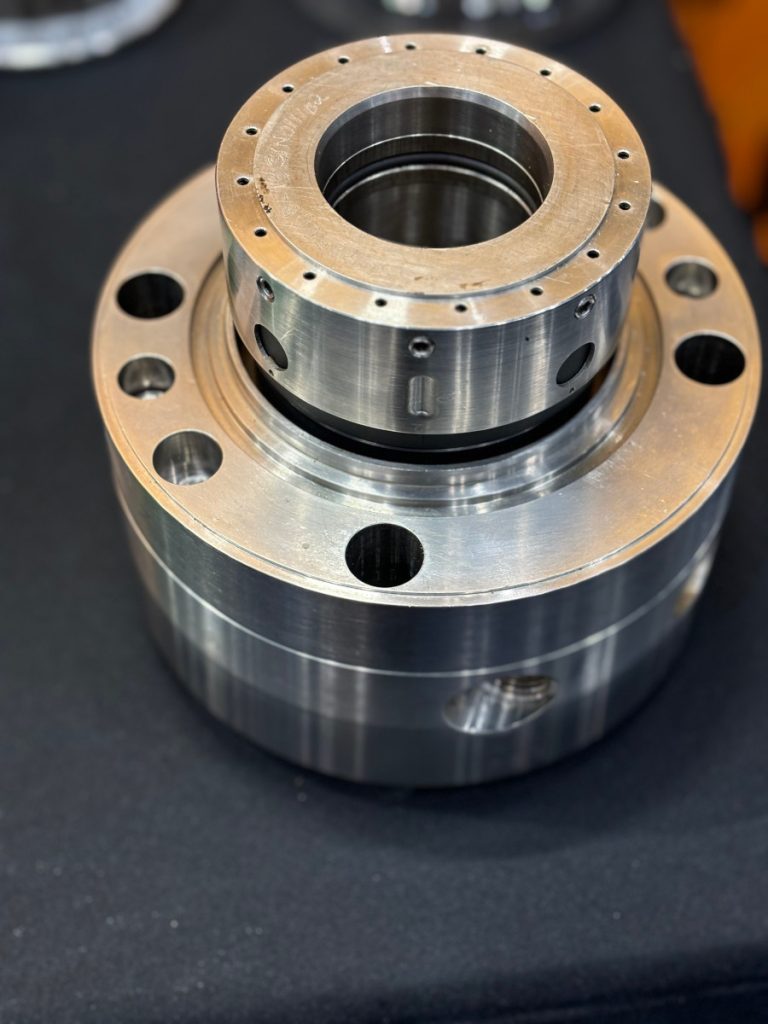 Custom-Engineered Solutions
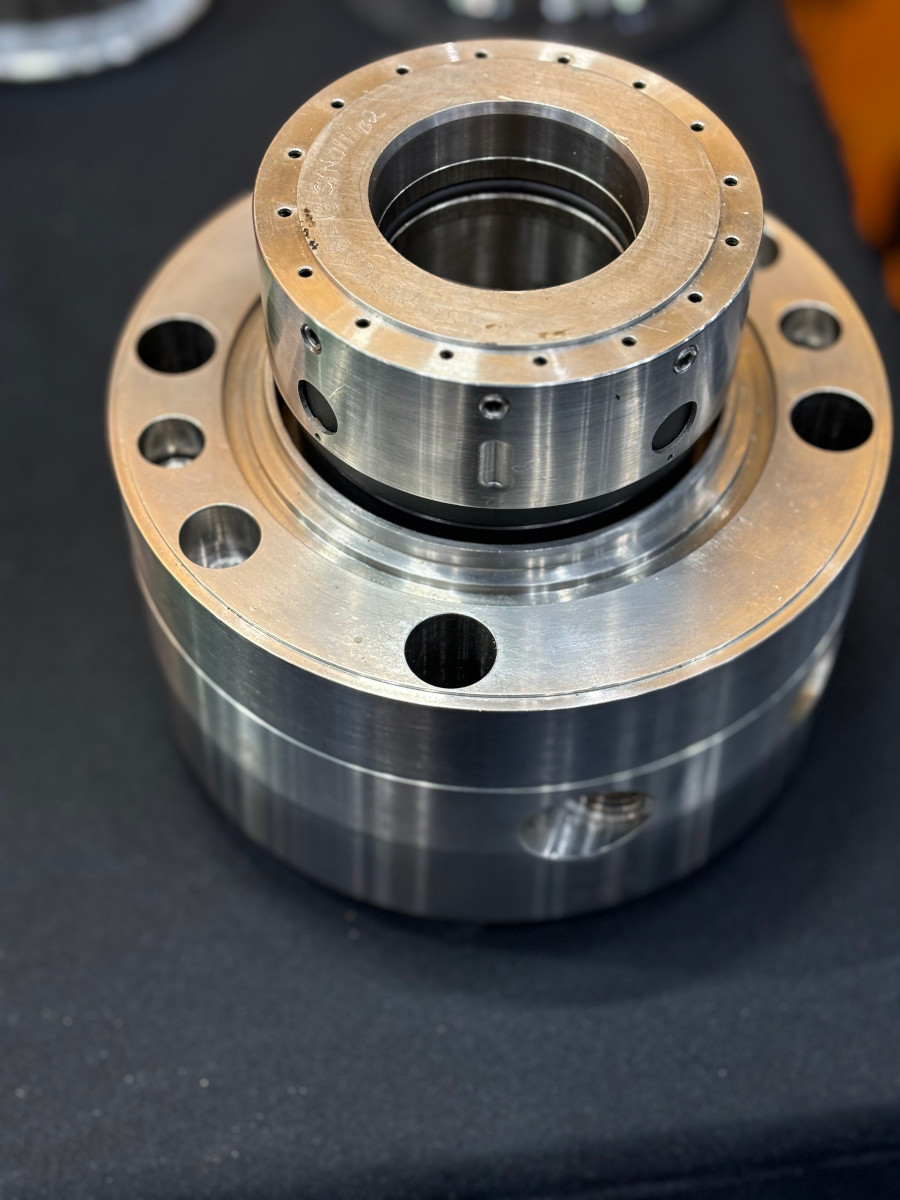
Stein Seal specializes in custom-engineered, application-specific mechanical seals. For pharmaceutical applications, we offer Type C contacting seals that are designed to provide superior performance in highly controlled and sterile environments. Our focus on customized designs helps in optimizing seal performance for particular process conditions, such as viscosity, temperature, and pressure.
Advanced Material Science
Stein Seal has invested heavily in material science to develop seals that can withstand the demanding conditions of pharmaceutical manufacturing. Using advanced materials like high-purity silicon carbide, tungsten carbide, and carbon graphite for seal faces, our seals provide excellent wear resistance, thermal conductivity, and chemical compatibility. These materials are crucial for reducing friction, minimizing wear, and extending the life of the seals.
Innovative Seal Designs
Stein has pioneered various innovative seal designs that enhance the reliability and functionality of Type C contacting API 682 seals. Our seals incorporate features like optimized flow paths for flush fluids, enhanced cooling mechanisms, and robust bellows configurations that improve flexibility and reduce stress. These innovations are essential for maintaining seal integrity in critical applications, such as mixing and blending operations in pharmaceutical processes.
Focus on Regulatory Compliance
Compliance with strict industry standards like API 682, ASME, and FDA regulations is vital for pharmaceutical manufacturers, where maintaining sterility, preventing contamination, and ensuring safety are top priorities. Stein seals are designed to minimize leakage, resist corrosion, and operate reliably under various pressure and temperature conditions.
Enhanced Seal Testing and Validation
Stein is known industry-wide for our rigorous testing and validation protocols, ensuring our seals meet the highest performance and reliability standards. This includes extensive lab testing, field trials, and computational fluid dynamics (CFD) simulations to optimize seal designs for specific applications. Our commitment to quality assurance results in highly dependable products that can be relied upon for critical pharmaceutical applications.


