
Efficiency Unleashed: How Turbine Seals Contribute to Power Plant Performance
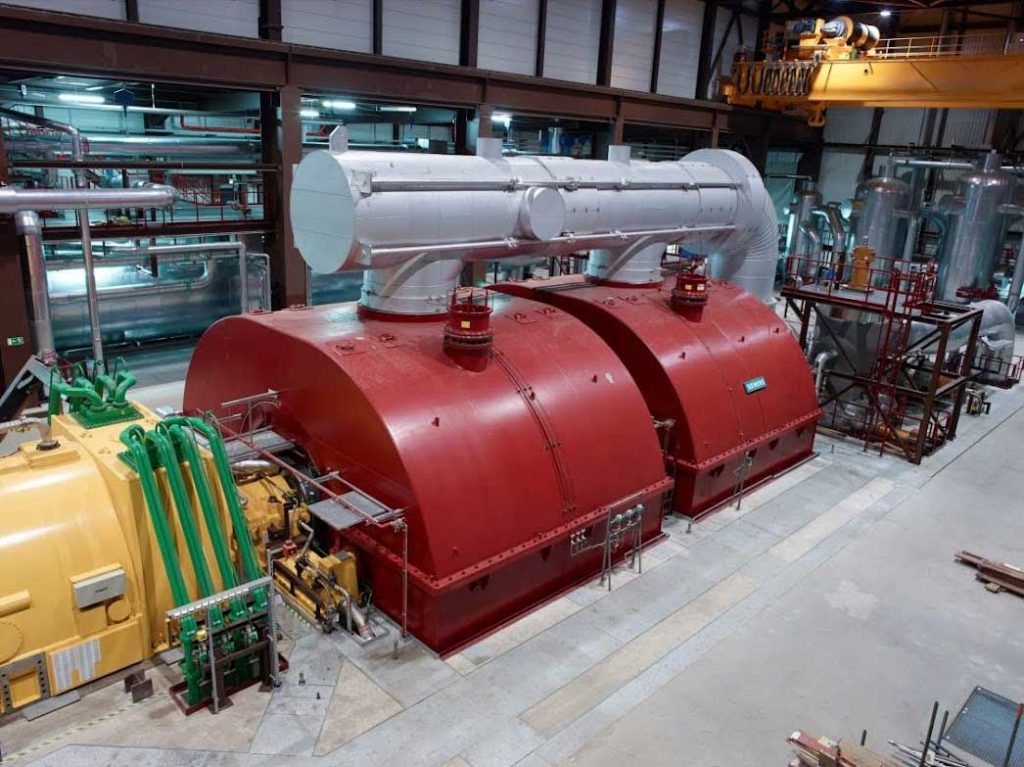 Whirled Domination: How Turbine Seals Help Power the Planet

Power plants, whether gas- or steam-powered, make use of turbines to convert natural kinetic energy into usable electrical power. And, wherever there is a turbine, there is likely to be at least one mechanical seal involved.
Stein Seal Industrial makes many of the seals that maximize the efficiency of turbines that feed the grid. In this blog, we’ll tell you about some of those seals, what they’re called, how they’re used, and why it matters.
Where the Seals Are: Turbine Seals in Power Plants
Turbine seals are located strategically throughout the power plant’s infrastructure. In steam and gas turbine systems, they are deployed to control leakage and help maintain efficient operations. Various types of turbine seals will typically be found in between rotating and stationary components, shaft seals at the entry and exit points of the turbine shaft, end seals at the high-pressure and low-pressure ends of the turbine, bearing seals around the turbine’s bearings, and exhaust and casing seals at exhaust points to control residual steam leakage and improve backpressure conditions in the turbine.
Each of these seals plays a crucial role in ensuring optimal turbine performance, reducing energy losses, and enhancing the reliability of the power generation process.
Efficiency Unleashed: How Turbine Seals Contribute to Power Plant Performance
A variety of mechanical seals play a critical role in the functioning of power plants by ensuring the reliable operation of steam, gas, hydroelectric, wind, and binary-cycle turbines. Primarily, turbine seals prevent leakage, protect internal components from the ingress of dust and other contaminants, enhance the system’s resistance to extreme temperatures, and generally increase efficiency while reducing the maintenance burden.
- Leak Prevention: Turbine seals create a barrier between high-pressure and low-pressure areas, reducing leakage of steam, air, or gas, and maintaining optimal efficiency.
- Component Protection: Seals prevent damaging contaminants, such as dust, dirt, or moisture, from entering the turbine system, helping prolong the life of critical components.
- Thermal Resiliency: Turbine seals can accommodate the expansion and contraction that occurs with thermal fluctuation. This permits proper fit and function under a wider range of operating temperatures.
- Improved Efficiency: By limiting leakage, seals help maximize the energy conversion process, improving overall turbine performance and reducing energy waste.
- Reduced Maintenance Costs: By minimizing wear and tear on turbine components, seals contribute to longer maintenance intervals and reduced downtime to the benefit of the bottom line.
Common Types of Turbine Seals
Turbine seals most commonly found in power plants include labyrinth seals, brush seals, and carbon ring seals. Each type has its signature strengths, as befitting the specific applications for which it was designed.
Labyrinth Seals
In the labyrinth seal, a series of interlocking fins (or teeth) line a complex, winding path that is the only way out for any would-be leaks. This non-contact design makes labyrinth seals ideal for applications with high pressure differential.
Brush Seals:
In a brush seal, flexible bristles are held against the turbine’s rotating shaft. Though they make constant physical contact with the shaft itself and can deliver better leak prevention than the labyrinth seal, especially in cases of shaft misalignment.
Carbon Ring Seals:
A carbon ring is held to the shaft through friction, forming a tight seal. These seals excel in high-temperature/ high-pressure systems like steam turbines. Carbon seals and labyrinth seals are often used together for even higher performance.


