
Harnessing Heat: Applications and Challenges of Molten Salt Seals

Molten salt is beginning to play a larger role in modern power. In concentrated solar power (CSP) plants, the heat retention properties of molten salt (in a sodium nitrate/potassium nitrate mixture) make it an excellent medium for the transport and storage of solar heat for use in driving turbines. But it is in the more complex, and more controversial, context of nuclear power where molten salt shows the greatest potential to help make clean, green, inexpensive electricity on a huge scale.
Advanced Nuclear Reactors/Breeder Reactors
There is a new generation of advanced nuclear reactors that are smaller, more efficient, and far safer than the much derided, hulking, water-cooled reactors of the 20th century. Among the new approaches is the Molten Salt Reactor (MSR), which uses molten salt instead of water as a primary coolant. This lets the reactor operate at higher temperatures with lower pressure than before, making nuclear power production more efficient and a lot safer.
Molten salt reactors (MSRs) utilize fluoride or chloride salts as liquid fuels and coolants, letting them operate at higher temperatures and lower pressure at longer intervals than conventional reactors. The benefits to safety are considerable, with reduced proliferation risk, passive safety system features, and less hazardous short-lived waste.
Because molten salt is a chemically inert coolant operating at low pressure, MSRs can easily incorporate passive safety systems that eliminate the need for many of the complex “fail safes” required by other kinds of nuclear reactors. MSRs can be designed to be “walk away” safe, meaning that, even without a human operator onhand, a plant could be designed to contain and shut itself down through various means before any contamination could occur.
BREEDER REACTORS–RECYCLING SPENT FUEL
Molten salt not only cools the reactor core, it also works as a solvent that can strip fission products out of spent fuel from other, less efficient, reactors, and recycle them back into the reactor. Known as a “breeder” reactor, this kind of MSR is so fuel-efficient, it can make more fuel than it uses and feed the excess back into the system. The byproduct of this process is far less hazardous to people and the environment, shorter-lived, and much easier, cheaper, and safer to manage and store.
Obstacles to Mainstream Use
With its unique properties and considerable benefits to stability, efficiency, and safety, molten salt is a compelling candidate for use in developing green power generation technologies. But there are concerns and obstacles to overcome before this kind of power production can be considered a viable, mainstream solution.
CORROSION AND COST
Salt is extremely corrosive to most metals, especially at high temperatures. Careful selection of materials, expensive treatments and coatings, and rigorous maintenance are all required to avoid failures of pipes, tanks, and other elements through corrosion. This adds to the already high cost of producing and maintaining molten salt–based systems, and it is an area of intense focus in research and development.
FREEZING AND SOLIDIFICATION
Molten salt freezes, or solidifies, if temperatures drop below 450°F. This can cause critical blockages of pipes, damage equipment, and crash the system instantly. Molten salt systems must incorporate intensive heat tracing and extensive insulation to keep the temperature above that freezing point at all times, even during shutdown.
THERMAL EXPANSION/CONTRACTION
Molten salt expands and contracts dramatically as temperatures rise and fall. Systems must be precisely engineered to withstand these added stresses. Precision engineering is required to safeguard against cracks and leaks that might form over time, compromising the structural integrity of the entire system.
HANDLING AND MAINTENANCE
With high temperatures and the constant threat of corrosion, molten salt systems are challenging to maintain. By establishing and adhering to strict maintenance protocols, long-term viability can be achieved. The required training of personnel, along with the cost and interruptions of frequent inspections, can increase operating complexity and eat into profitability.
ENVIRONMENTAL
People are understandably wary of being promised environmentally safe, affordable, abundant energy. There are concerns associated with the use of molten salt in power generation, including risks to the environment and to people. Robust safety and risk management are a top priority, especially when the molten salts used have toxicity.
SYSTEM INTEGRATION
Integrating molten salt systems with other components of a power generation plant (e.g., steam generators, turbines) can be complex, requiring careful design and engineering to ensure compatibility and efficiency.
It All Comes Down to the Seals
In the ongoing effort to develop the technologies necessary for molten salt to reach its full potential in the safe, efficient production of affordable power, much attention is going to the invention of new industrial seals to be used throughout the process.
Engineers and manufacturers of mechanical seals are meeting this challenge with new products that can keep process materials contained, preventing cracks, leaks, and other failures.
Overall, while there are significant challenges associated with using molten salt in power generation, ongoing research and technological advancements are helping to mitigate these issues, making molten salt an increasingly viable option for efficient and reliable energy production.
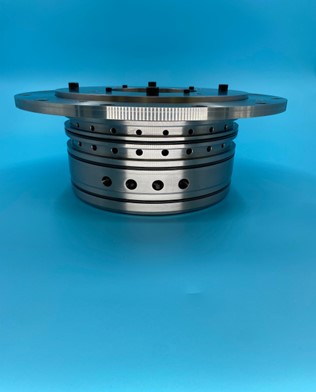
STEIN SEAL IS ON IT
Stein Seal has been developing seal technologies for use in molten salt reactors since the 1960s, when the French Superphénix fast-breeder reactor was built to generate power while reprocessing spent fuel from conventional nuclear reactors.
Perhaps way ahead of its time, Superphénix was hobbled by a hostile political environment and a public grown wary and fearful of nuclear power as it was then understood. As a result, the project was never permitted to reach its full potential, and the world remained largely unaware of the possibilities it represented.
However, much was learned in the process, and research and development have continued apace in the intervening decades. As we were over 60 years ago, Stein Seal remains on the leading edge of this important technological front.


